
Staging
Virtual Staging or Real Staging? What Home Sellers Should Know Before Choosing
Real staging and virtual staging can both help a listing stand out, but they cost different amounts, work in different ways, and come with different rules. Here is how to choose.
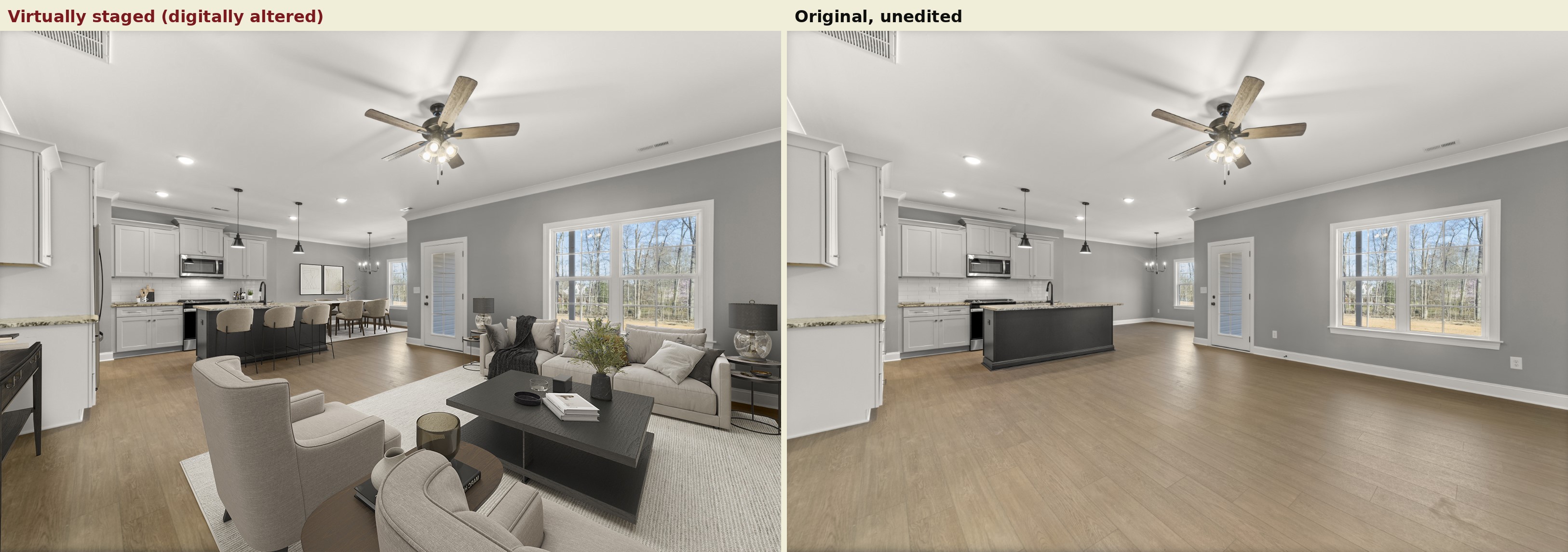
Staging used to mean one thing: renting furniture, moving it in, and hoping it all looked right on photo day. Today sellers have a second option. A photo editor can place furniture into pictures of an empty room, usually in a day or less and for a fraction of the price.
Both options can help a home get more attention online. They are not the same thing, though, and choosing the wrong one can cost a seller money or trust. This guide explains what each one is, what each one costs, what the research says, and where the rules and honesty lines sit, so you can decide what fits your home.
What Is Real Staging?
Real staging is the physical process of preparing a home for sale. That can mean a full job where a professional brings in furniture, art, rugs, and accessories. It can also mean a lighter version, often called partial or soft staging, where a stager works only on the living room, kitchen, and main bedroom. Sellers who still live in the home can also do live-in staging, which uses the furniture they already own, arranged and edited to photograph well.
Real staging works in two places. It improves the photos, and it improves the showing. A buyer who walks through the door sees the same warm, uncluttered home they saw on their phone.
What Is Virtual Staging?
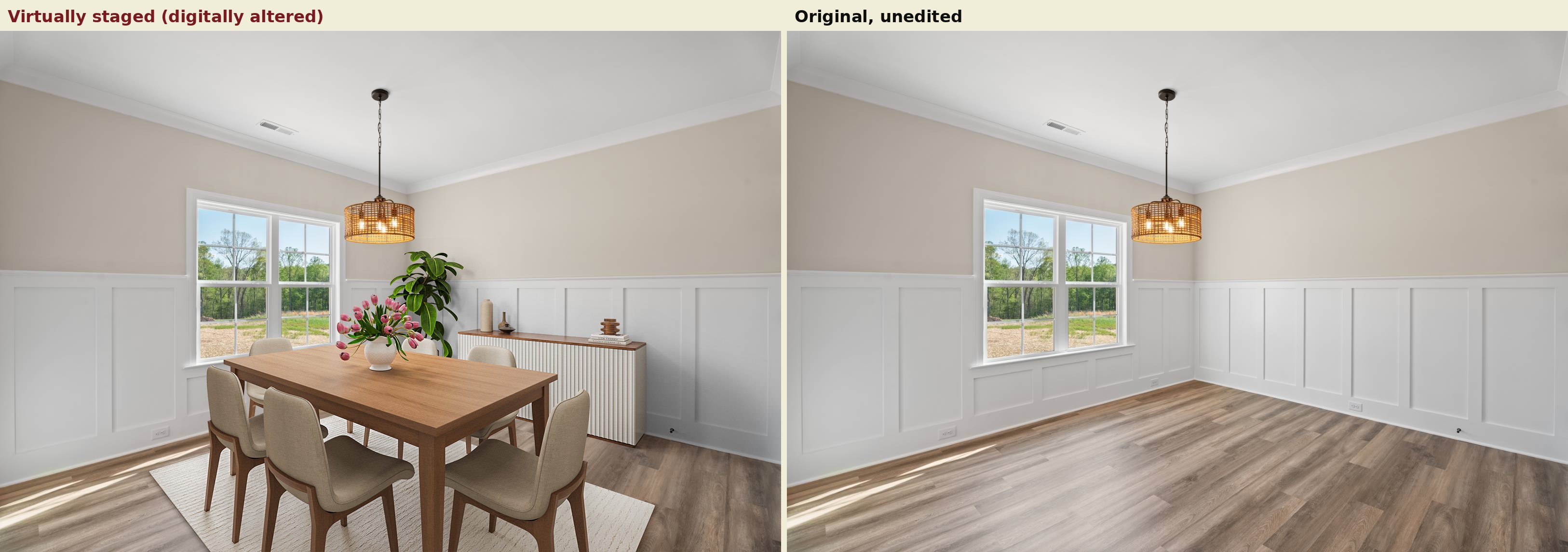
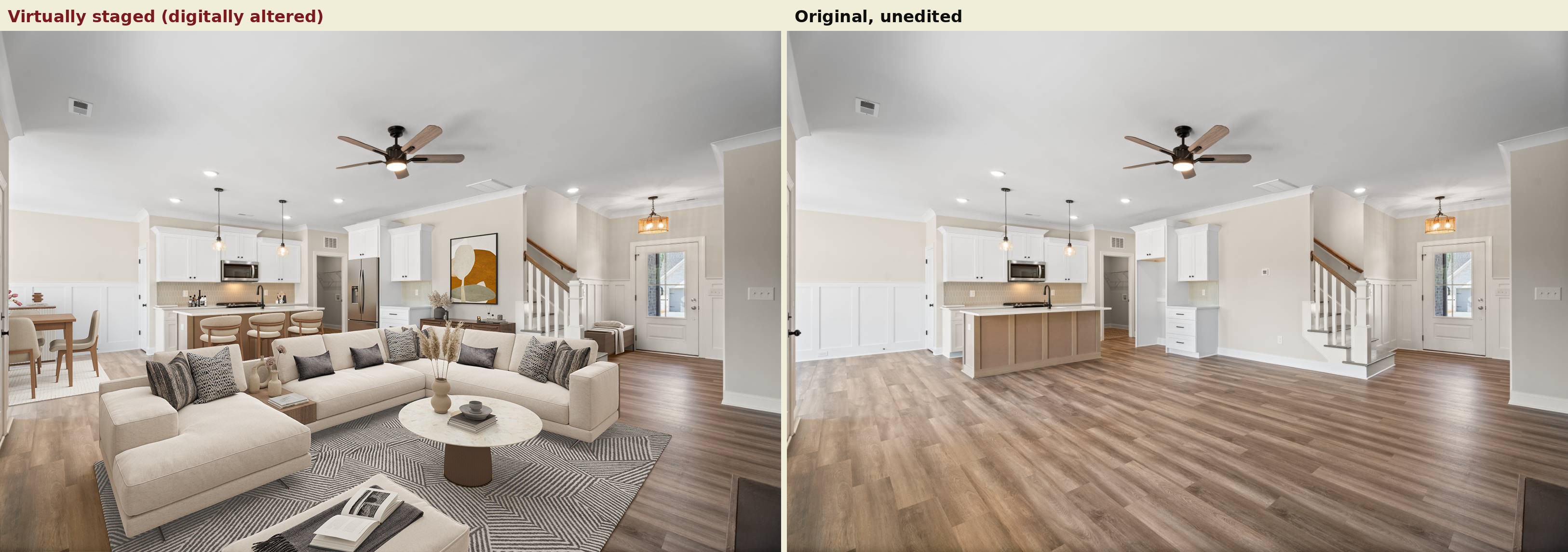
Virtual staging adds furniture and decor to a photograph digitally. A designer or an artificial intelligence tool takes a photo of an empty or outdated room and places a sofa, rug, lamp, and artwork into it. The room itself does not change. Only the picture does.
Virtual staging is most useful for vacant homes, empty bonus rooms, and basements where buyers struggle to judge the size of a space. It can also show a spare room set up as an office, a nursery, or a workout room, which is hard to do with one set of physical furniture.
How Much Does Each Option Cost?
Published pricing surveys put full-service physical staging at roughly $1,500 to $4,000 for the first month, with additional months costing more. The final number depends on the size of the home, how many rooms are staged, and how long the furniture stays.
Virtual staging is far cheaper. Many services charge about $20 to $50 per photo, and some artificial intelligence tools charge a monthly subscription instead. A seller staging four or five key rooms virtually might spend a few hundred dollars, compared with thousands for the physical version.
Those figures are national ranges, not BSRM prices, and local costs vary. Ask for a written quote before you commit to either option, and ask exactly which rooms and how many images are included.
What Does the Research Say?
The 2025 Profile of Home Staging from the National Association of Realtors found that 83 percent of buyers' agents said staging makes it easier for buyers to visualize a property as their future home. About one in six buyers' agents said staging raised the offer price by 1 to 5 percent compared with similar homes that were not staged.
The same research found that 57 percent of buyers' agents said traditional, physical staging was more or much more important to their clients than the digital kind. That is worth taking seriously. Buyers respond to a home they can walk through, and a virtually staged room is empty when they arrive.
Virtual staging has its own strengths. A well-done staged photo can earn more clicks and more showing requests, because buyers scrolling on a phone can immediately see how a room could be used. Results vary by home and by market, and no staging method guarantees a faster sale or a higher price.
When Real Staging Is the Better Choice
Real staging usually makes more sense when:
- The home is occupied and already furnished. Editing and arranging what you own often costs little and photographs well.
- The home is higher priced. Buyers at higher price points tend to expect a finished, move-in-ready feel in person.
- The layout is unusual. Odd rooms, long hallways, and spaces with no obvious purpose are easier to understand when furniture defines them.
- You expect a lot of showings. The in-person experience matters as much as the photos.
When Virtual Staging Makes Sense
Virtual staging is usually the smarter move when:
- The home is vacant. Empty rooms photograph smaller than they are, and buyers often cannot judge scale.
- The budget is tight. A few virtually staged key rooms cost a small fraction of a full physical staging job.
- The timeline is short. Virtual staging can be finished in a day or two, sometimes within hours, while physical staging takes scheduling and delivery.
- A room has more than one possible use. Showing the same room as an office and as a bedroom helps buyers see the options.
Can You Do Both?
Yes, and many sellers do. A hybrid approach physically stages the rooms buyers care about most, such as the living room, kitchen, and primary bedroom, and uses virtual staging for secondary bedrooms, a basement, or a bonus room. This keeps costs under control and still gives buyers a good in-person experience in the rooms that drive decisions.
The Honesty Rules Sellers Should Know
Virtual staging comes with a responsibility. A photo that makes a home look better than it is can mislead a buyer, and misleading photos can get a listing flagged or cause problems during a showing.
Rules vary by Multiple Listing Service and by region, so confirm the local rules with your listing agent before you upload anything. In general, the common expectations are:
- Label the image. Virtually staged photos should be clearly marked as virtually staged or digitally altered.
- Show the original. Many listing services require or strongly encourage including the unedited photo of the same room.
- Keep changes cosmetic. Adding furniture and decor is one thing. Changing a room's size, hiding damage, removing a power line, or altering a view is another, and it crosses the line into misrepresentation.
If your listing service does not allow virtually staged photos, you may still be able to use them on a property website or in social media, as long as they are clearly labeled.
How BSRM Handles It
At BSRM, our standard is simple. Any photo that has been decluttered or virtually staged is labeled as digitally altered, and the unedited original sits in the same gallery folder. Edits stay cosmetic. We do not hide defects or change what a buyer will find when they walk in.
Getting the Most Out of Either Option
Staging, real or virtual, only works when the photos underneath are good. A few things help in both cases:
- Start with a clean, decluttered room. Virtual staging cannot fix a messy base photo, and physical staging cannot hide one.
- Use bright, even light. Open the blinds and turn on the lamps before the shoot.
- Match the style to the home. A cozy farmhouse and a modern townhome need different furniture, real or digital.
- Show the original too. It builds trust and keeps you within the listing rules.
- Talk to your agent early. They know which rooms matter in your market and what your local listing service allows.
The Bottom Line
Real staging gives buyers a better experience in person. Virtual staging gives buyers a better picture online, at much lower cost, and works especially well for vacant homes. Many sellers get the best result by combining the two, as long as every digitally altered photo is labeled and the originals are available.
If you are listing in Western Nebraska, Eastern Wyoming, Indiana, or Kentucky and want to talk through photos, staging, or what a vacant room could look like, reach out to BSRM through the contact page.
Share this article