
real estate marketing
How Virtual Tours & 3D Floor Plans Help Homes Sell Faster
Virtual tours and interactive 3D floor plans have become the fastest-growing listing tools in real estate. Learn how they work, why agents are adopting them, and how they directly impact days-on-market.
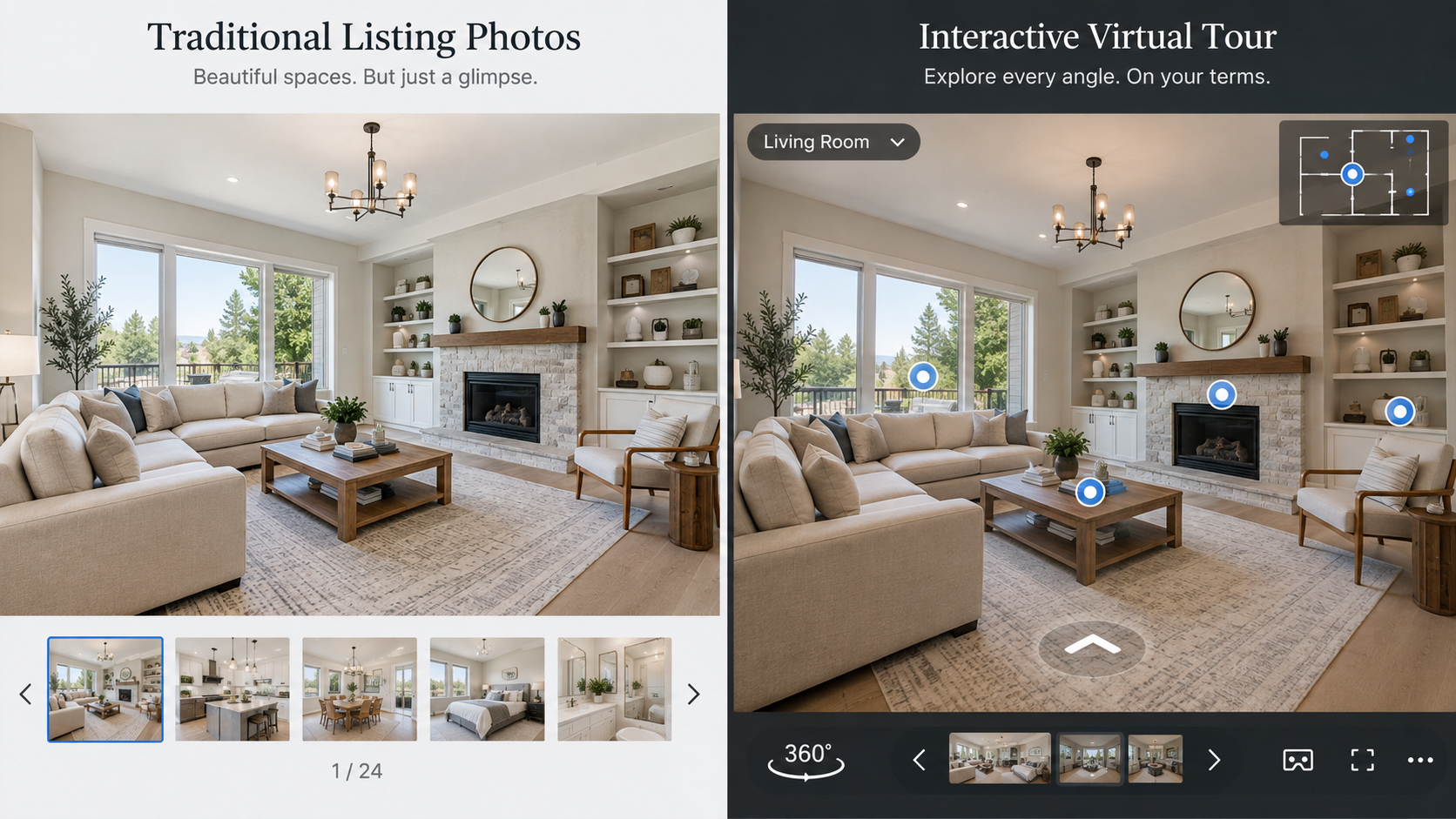
How Virtual Tours & 3D Floor Plans Help Homes Sell Faster
In today's real estate market, buyers are more selective—and more tech-savvy. They expect to explore a property digitally before scheduling an in-person showing. Virtual tours and 3D floor plans are no longer a luxury for premium listings; they've become the standard buyers and agents expect. The data backs this up: listings with 3D floor plans and virtual tours spend fewer days on market and attract more qualified leads.
This guide covers what virtual tours and 3D floor plans are, why they matter, and how to use them to close deals faster.
What Are Virtual Tours and 3D Floor Plans?
Virtual tours are digital walkthroughs of a property. Typically generated from a series of high-resolution photos, they allow buyers to navigate through rooms at their own pace, zooming in on details and moving fluidly from space to space. Some platforms use 360-degree photos; others create fully immersive 3D environments.
3D floor plans are interactive overhead views of a property's layout. Unlike static 2D floor plans, 3D versions let buyers visualize furniture placement, room dimensions, and flow. Many include features like:
- Bird's-eye perspective views
- Realistic material and furniture visualization
- Accurate square footage measurements
- Wall thickness and opening details
Together, these tools give buyers both a sense of space (the 3D floor plan) and an emotional connection (the virtual tour). That combination matters.
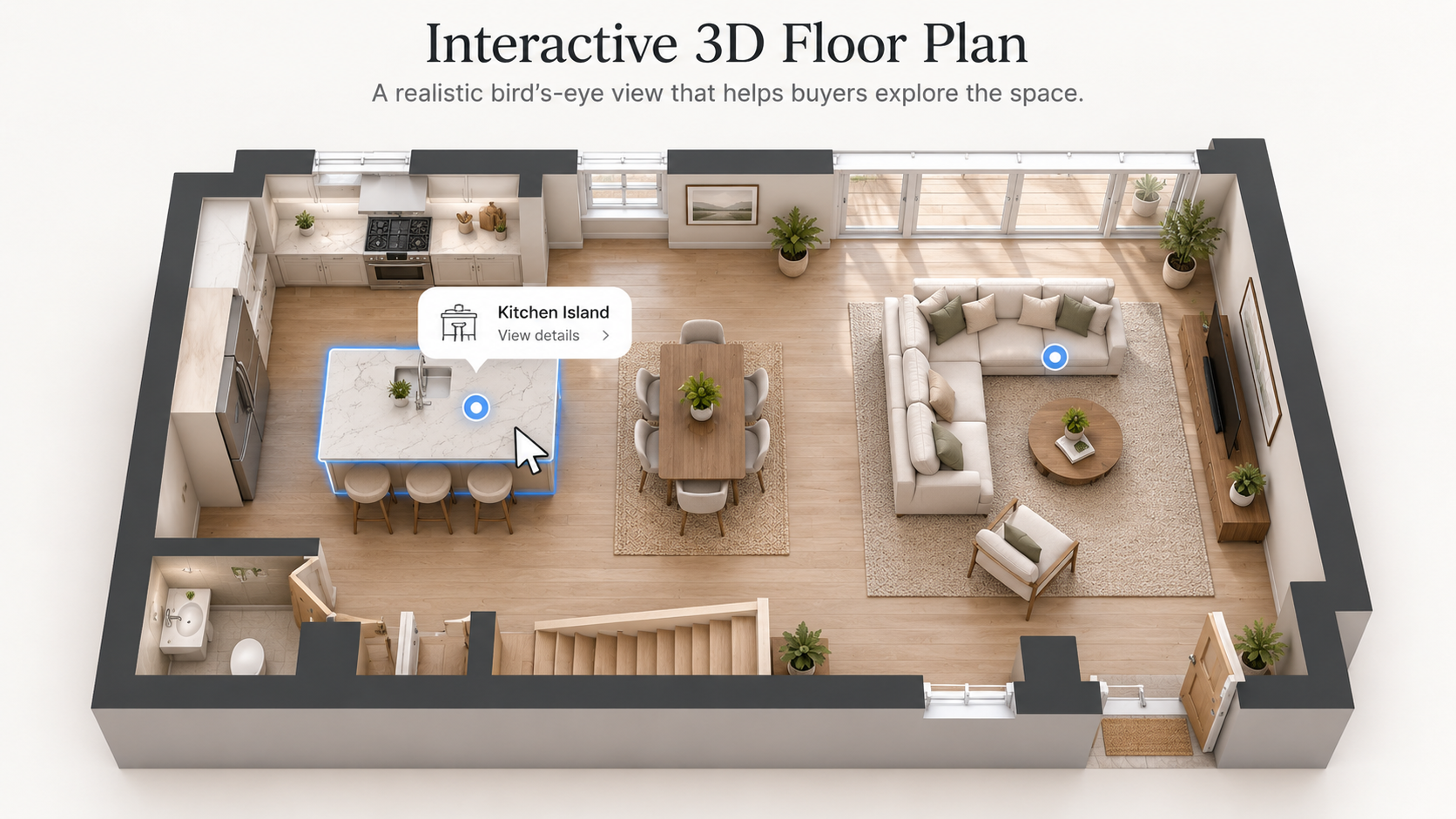
An interactive 3D floor plan helps buyers understand how rooms connect, how furniture fits, and how the home flows before they visit.
Why Agents Are Adopting Virtual Tours and 3D Floor Plans
Reach remote buyers. A buyer shopping from another state can explore the property fully before booking travel. This expands your agent's reach beyond local markets.
Reduce tire-kicking. Unqualified buyers self-select out when they see the layout isn't right for them. Your agent spends time only on serious prospects.
Speed up decisions. Buyers who've already walked through a property digitally are more confident when they show up in person. They move faster through negotiations.
Stand out in a crowded market. In markets where most listings still use static photos, a property with a full virtual tour and floor plan instantly looks more professional and buyer-ready.
Stay available 24/7. A virtual tour works around agent schedules. Buyers can explore at midnight on Sunday. This passive showing process generates interest continuously.
The Impact on Days on Market and Pricing Power
Research from major real estate platforms consistently shows that properties with virtual tours and floor plans sell faster and often at higher prices than comparable properties with photos only. The exact impact varies by market and property type, but the trend is clear: buyers and agents perceive virtual tours as a sign of serious, professional selling.
For agents using these tools, the ROI appears in two ways:
- Faster sales → Higher transaction volume
- Competitive advantage → Clients choose agents who offer these services
Static photos show individual rooms; virtual tours let prospective buyers explore the relationship between spaces at their own pace.
How to Get Virtual Tours and 3D Floor Plans for Your Listings
Matterport and Professional Platforms
Matterport is the industry standard for professional 3D tours. A certified Matterport photographer captures the space, and Matterport software stitches it into an interactive tour. Cost ranges from $200–$500+ per property, depending on size and location. Matterport integrates directly with most MLS systems and listing sites.
Other options include Zillow 3D tours, Realtor.com virtual walkthroughs, and platform-specific tools. Some agents opt for multiple platforms to ensure visibility across all buyer search channels.
2D/3D Floor Plans
Floor plans can be generated from professional photography, drone footage, or laser measurements. Simpler 2D plans are faster and cheaper; 3D plans with furniture visualization take longer but convert more buyers. Many real estate photography companies—like Big Sky Realty Media—include interactive floor plans in their listing packages.
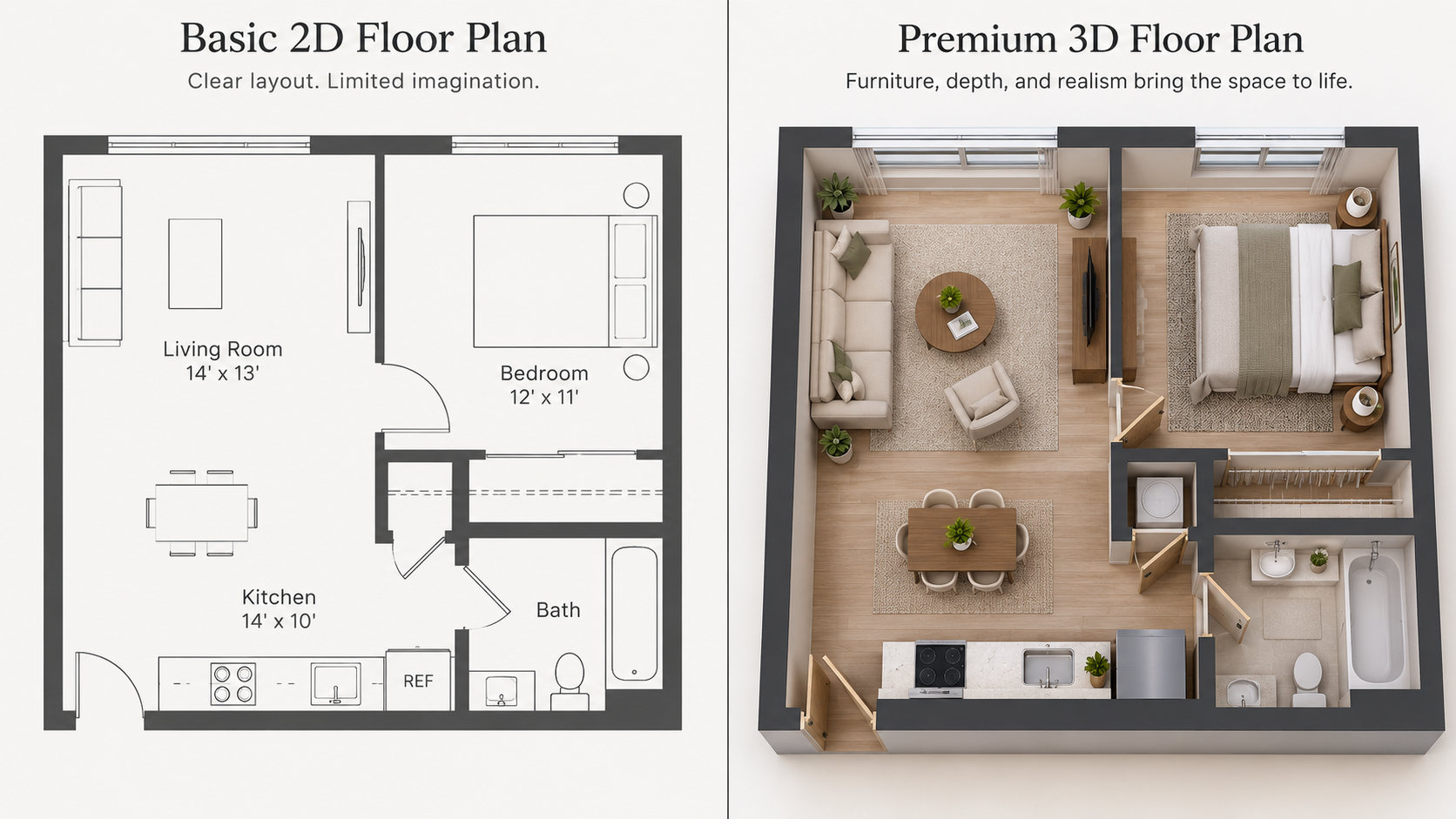
Adding furnishings, textures, and depth turns a functional 2D plan into a more intuitive picture of how a home can feel and function.
AI and Automation
Newer tools use AI to generate floor plans directly from photos or video. While not always as precise as professional measurement, they're fast and cost-effective for agents who need quick turnarounds.
Best Practices for Virtual Tours and Floor Plans
1. Start with great photography. Virtual tours are built from photos or video. If the base photos are poorly lit or poorly composed, the tour looks cheap. Professional HDR photography makes virtual tours shine.
2. Stage thoughtfully. For 3D floor plans with furniture visualization, choose neutral furniture and décor. Over-personalization can distract buyers from envisioning themselves in the space.
3. Make floor plans accurate. An off-by-a-foot floor plan damages credibility. Invest in professional measurement or laser-scan accuracy.
4. Update the tour when the property condition changes. If a major repair or update happens after the tour is shot, reshoot. An outdated tour feels neglectful.
5. Promote the virtual tour in your listing description. Use language like "Explore the 3D floor plan" and "Take the interactive virtual tour" in your MLS remarks and listing description. Buyers won't use tools they don't know exist.
6. Embed on your own marketing. Link to the virtual tour in your email campaigns, listing websites, and social media posts. The more places a buyer can access it, the more engagement you'll get.
Virtual Tours Work Best in These Scenarios
Virtual tours deliver the highest ROI for:
- Vacant or staged properties — Buyers see potential clearly without furniture clutter
- Unique or architecturally interesting homes — The 3D layout is a selling point
- Luxury properties — Buyers expect premium listing presentation
- Multi-unit or commercial properties — Floor plans are essential for comparing layouts
- Out-of-state sellers or buyers — Distance shopping demands digital confidence
They're less critical for small, simple layouts that photographs alone can convey clearly—though even simple homes benefit from the extra engagement virtual tours provide.
The Bottom Line
Virtual tours and 3D floor plans aren't future trends anymore; they're today's standard for serious real estate professionals. They reduce days on market, attract more qualified buyers, and position agents as tech-savvy and buyer-focused. If your listings don't include them, your competition's do—and buyers notice.
For agents looking to add virtual tours and floor plans to their listings, working with a real estate media partner who understands both photography and digital tools is key. Professional HDR photos, drone imagery, and accurately generated floor plans give your agent-branded virtual tour the credibility and polish that sells homes faster.
Share this article